
Redefining Winning: Algorithms Are Reshaping Our Imagination
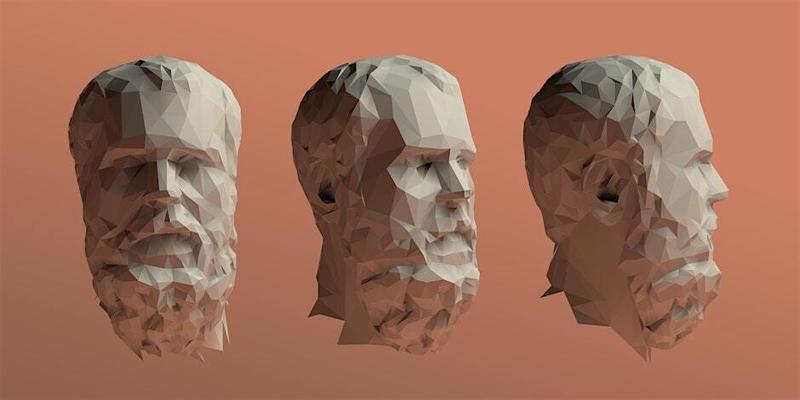
From Aristotle to Asimov, the evolution of our collective imagination has fascinated philosophers, scientists and storytellers for millennia. Each new shift in culture, from the development of language to the arrival of colour TV, has fundamentally altered how we perceive the world around us, and the spaces we dream up inside our own heads.
The latest stage in that process has been the takeover of our imaginative lives by the algorithm. Whether it’s AI hallucinations clogging our social feeds, or decision paralysis whenever we boot up Netflix, our fears, dreams and desires are all now moulded by an endless, constantly shifting stream of digital information.
The implications for our creativity and culture remain unclear. Has the algorithm helped us unlock new frontiers of self-expression and understanding, or trapped us inside a rigid system of boundaries and expectations? Is it ultimately weakening or expanding our ability to think for ourselves?
These aren’t new debates, of course. In his 250 BC work De Anima, Aristotle describes creativity as a less elevated form of expression than intellect or reason, the qualities that underpin our consciousness and set us apart from the natural world. If animals dream, he says, then our own imaginations must be similarly malleable and unrefined. If he were alive today, watching our brains get rearranged by constant sensory overload, he’d probably feel like he’d been proved right.
Society’s attitudes to imagination and creativity have rarely remained constant. In the 15th century, it was suggested that imagination could be hereditary: that the daydreams of expectant mothers could affect the development of their unborn child. During the Enlightenment, philosophers like David Hume came to understand that our imagination is socially constructed, a reflection of the environment around us. The popularisation of cinema in the early 1900s infamously caused large numbers of people to dream in black and white, a trend only reversed when colour TVs became ubiquitous half a century later.
Today, it’s the algorithm which is driving those changes. AI-generated imagery floods our feeds. Self-reinforcing cycles of outrage and attention determine whether or not content goes viral. Companies outsource their customer service to algorithmic agents. Our cultural horizons are dominated by these emotional and aesthetic feedback loops, inextricable from the structures underpinning global tech platforms. “We shape ourselves around the cultural reality of code,” as the author Ed Finn puts it.
This can, in places, generate bold new imaginative possibilities. London-based electronic musicians like patten and Wordcolour have harnessed AI for music and visuals respectively, using the unreal nature of the algorithm to explore uncanny and eerie creative territory. Instagram account Crisis Acting turns the everything-goes accessibility of our social algorithms into high art, juxtaposing surreal and unexpectedly beautiful images from around the world to form a “psychic map of now”.
But the algorithm can just as often be a barrier to creativity. 62% of UK students believe that AI is negatively impacting their skills and development. Researchers at MIT have suggested that using ChatGPT harms brain development, particularly amongst children. From Spotify’s increasing use of mass-produced playlist fodder to the US and Iranian governments trading AI slop memes, genuine creative work is pushed further to the fringes. Earlier this year, Crisis Acting’s account was deleted after an automated copyright strike from a faceless engagement-farming meme aggregator called Viral Hog.
A pushback is already underway, however. Instead of outsourcing their cultural diet to the algorithm, young audiences are increasingly embracing old tech like MP3 players, or social forms of consumption like book clubs, precisely because they feel more intentional. less susceptible to the flattening qualities of the algorithm, and more nourishing for our imaginations than more passive forms of engagement.
In 2024’s The Imagination Muscle, the author Albert Read makes a case for thinking about “imaginative health” in the same way we think about physical, mental or emotional wellbeing: as something to be nurtured and strengthened in deliberate, self-aware ways. “We need to think of the imagination differently,” he argues. “It’s not something bestowed from above. It’s something within you.”
This feels like an important principle to hold onto as the algorithm continues to invade our everyday lives, our internal worlds, and even our subconscious. If we’re to preserve our imaginative and creative capacity, we need to learn to say no to the easy, instant gratification of the algorithm. “I am enough of an artist to draw freely upon my imagination,” said no less a figure than Einstein, in a 1929 interview. “Knowledge is limited. Imagination encircles the world.”