
Redefining Winning: What Does Winning Mean When the Message Isn't Loud and Brash?
.jpg)
We’ve seen it plenty in recent years, with brands building spaces with community at the centre of bringing people together. The brands that have done this well aren’t just doing so on a one-off basis; it's continued, evolving, and, most importantly, it centres imagination and what can sprout.
Angelic Report, a London-based streetwear brand, has 1.5k Instagram followers, but items often sell out in small and limited quantities. I bought one of their trucker hats back in 2023 (and subsequently lost it cycling along the coast of Marseille last year), but what drew me to it was its bold design of a Sailor Jerry-esque pinup girl in a cocktail glass with the words ‘Club Angelic Report’ on either side. It felt fresh and didn’t bootleg an existing brand logo. The brand is also stocked in shops in Atlanta, London, Paris and Osaka.
Last year, they hosted a pop-up space that felt more like a flea market than a store, with a bit of skating too. Unfortunately, there’s not much detail on the brand’s Instagram about the event, so it’s left to the imagination of those who couldn’t attend and a unique retail experience for those who did. That impermanence feels particularly gratifying in a retail world where so much traction is built online first. This wasn’t about building hype with a ‘one-in-one-out’ queue system but inviting all your mates to come down and have a bit of fun.

Where these moments don’t always need to be documented or recorded, brands such as Angelic Report haven’t built an identity out of scarcity but by imagining what will come next. Funnily enough, A24’s The Drama, starring Robert Pattinson and Zendaya, leaned into this approach with the film’s trailer and overall campaign. The trailer described the film as a rom-com without actually detailing the premise.
Compared to Marty Supreme’s promo run, audiences were left to really imagine what The Drama was about, and although many believe the film had spoilers, few who watched it for the first time could predict the twists and turns it took. Personally, it was the kind of dark comedy I’m drawn to in film and found myself genuinely laughing out loud throughout the running time. I’ve spoken to friends about it and am now writing about it. It sparked an illuminating conversation around a myriad of social and cultural issues that felt timely. Had the trailer given this away, the draw wouldn’t have been the same.
Granted, A24 hasn’t necessarily built a community in the traditional or brand sense, but has created discourse around its films that inspires you to go to the cinema, still very much a physical brand space these days. The Drama had all the chaos an A24 film is known for, through this, the studio has succeeded in bringing people together in a continued way that also leans into imagination – just how far can they take the chaos?
Similarly, these behaviours around being in the conversation aren’t necessarily about who’s loudest. This goes against previous ideas of winning, which have often been about whose presence feels more potent, particularly in a hypermasculine sporting context. Did Marty Supreme’s promo have to be so loud, considering that ping pong isn’t considered a super physical sport demanding strength like boxing, football or rugby? Probably not, but it helped keep it in conversation.
However, this isn’t the only route to success, as Lil Wayne once said, “Real Gs move in silence like Lasagne.” Quiet confidence allows us the space to imagine. Particularly when popular culture and politics from the manosphere, wellness influencers and world leaders lean into outdated ideas of success. The veil has been lifted, and we’re seeing that success isn’t defined by the old metrics, largely because they prey on our vulnerabilities rather than leaning into our strengths.
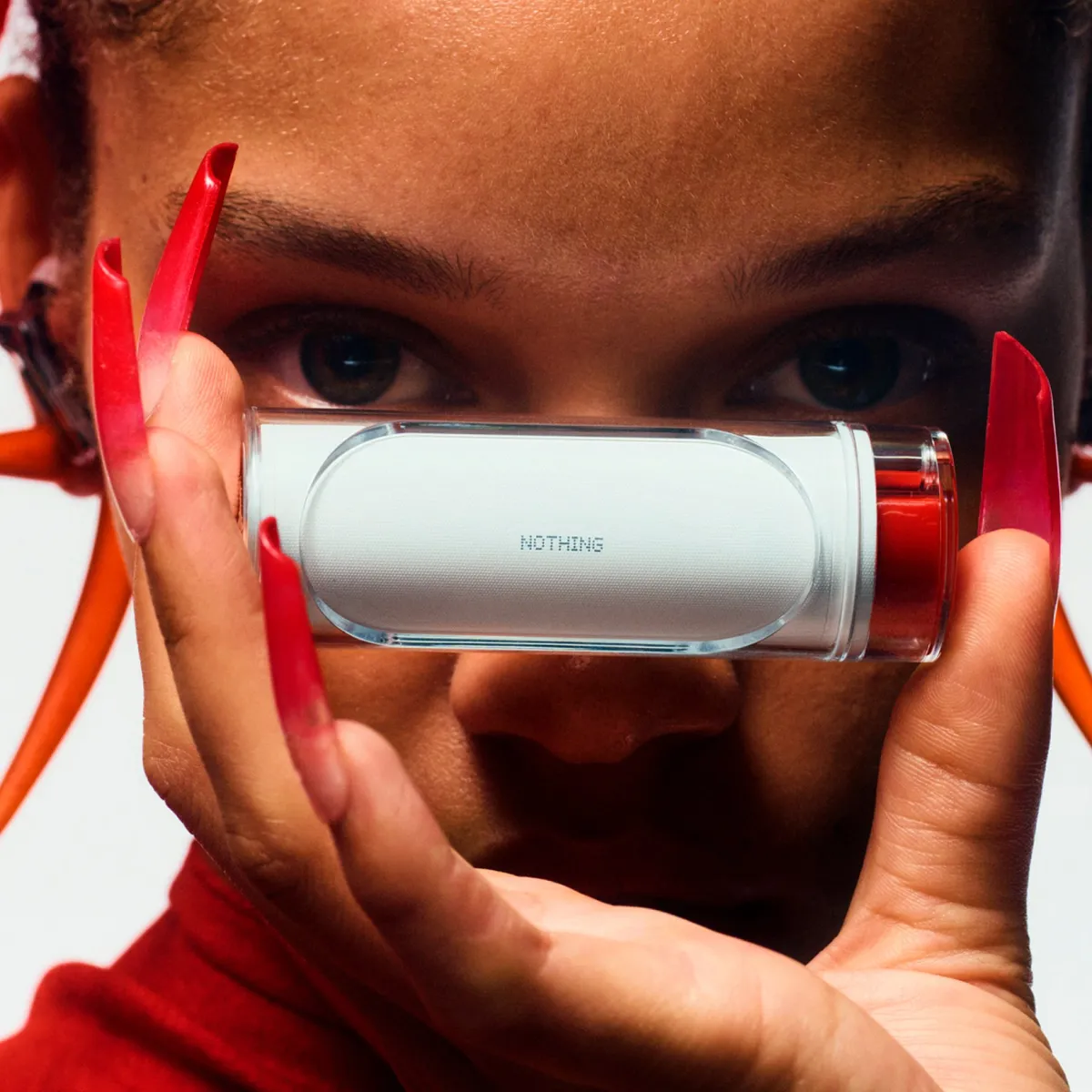
The post below by The Orbit captures how tech brands such as Nothing are slowly capturing attention, without being loud. Nothing’s messaging borrows from the ads of the early 2000s tech without recreating. Rather, it reimagines a moment halted by the iPhone and digital streaming that diverted the design leadership that brands such as Sony once commanded. With Nothing appearing at fashion shows and now more frequently among consumers, we’re seeing how tech can show up in physical spaces without necessarily shouting that it’s here. It’s an approach that Nothing’s founder Carl Pei is doubling down on. It worked in the early 2000s with brands such as Oakley, Prada and Sony (PlayStation) because there was a risk in imagining what the future could bring without any certainty that any of the ideas would land.

In a Vogue Business report last December, it reported that, “Pei is also keen to infiltrate culture. In the last year, the company has sponsored concept store openings, while its headphones are increasingly hooked around bag straps at fashion parties. They also appeared on the runways of Marie Lueder and Jane Wade’s Spring/Summer 2026 fashion shows in London and New York, respectively.” That Nothing products have become accessories in their own right speaks to the imagination the brand has imbued among its audience.
An example of this in footwear is the risk New Balance took in partnering with Chicago-based designer Joe Freshgoods, who has worked with the brand since 2020, giving him free rein and access to its archive. In turn, New Balance’s sales have grown considerably since then. It took a bold, alternative and imaginative approach to collaboration, compared to Nike’s DN8 campaign, which felt loud. However, it tried to look beyond traditional silhouettes, but much of it rested on influencers and celebrities rather than communicating how it would benefit a new audience. The campaign didn’t land as well as hoped because the risk and imagination didn’t seem to outweigh its loudness.
WHAT THIS MEANS FOR BRANDS
Each of these moments, from the limited-run trucker hat and the flea-market pop-up to the ambiguous film campaign and the fashionable tech accessory, feels quiet but commanding in its messages. They are unassuming but bold, allowing us to imagine the crucial role brands play in physical spaces that extend far beyond the traditional retail transaction.
For brands, success is no longer solely about easily quantifiable metrics like conversion rates, follower counts, or immediate sales figures. Instead, it’s a more nuanced victory measured by the depth of conversation, the genuine human connection fostered, and the lasting, often unquantifiable, emotional resonance a moment creates. When a brand inspires a feeling, whether it's the thrill of a unique retail experience, the satisfaction of owning a limited piece, or the buzz of an ambiguous film campaign, that emotional impact becomes the ultimate indicator of success, proving more potent and enduring than any short-term digital metric.
One thing is certain: winning, whether through reaching a destination or an end goal, requires an element of risk and imagination.