
Redefining Winning: Why Instinct and Ingenuity are the Essence of Sport
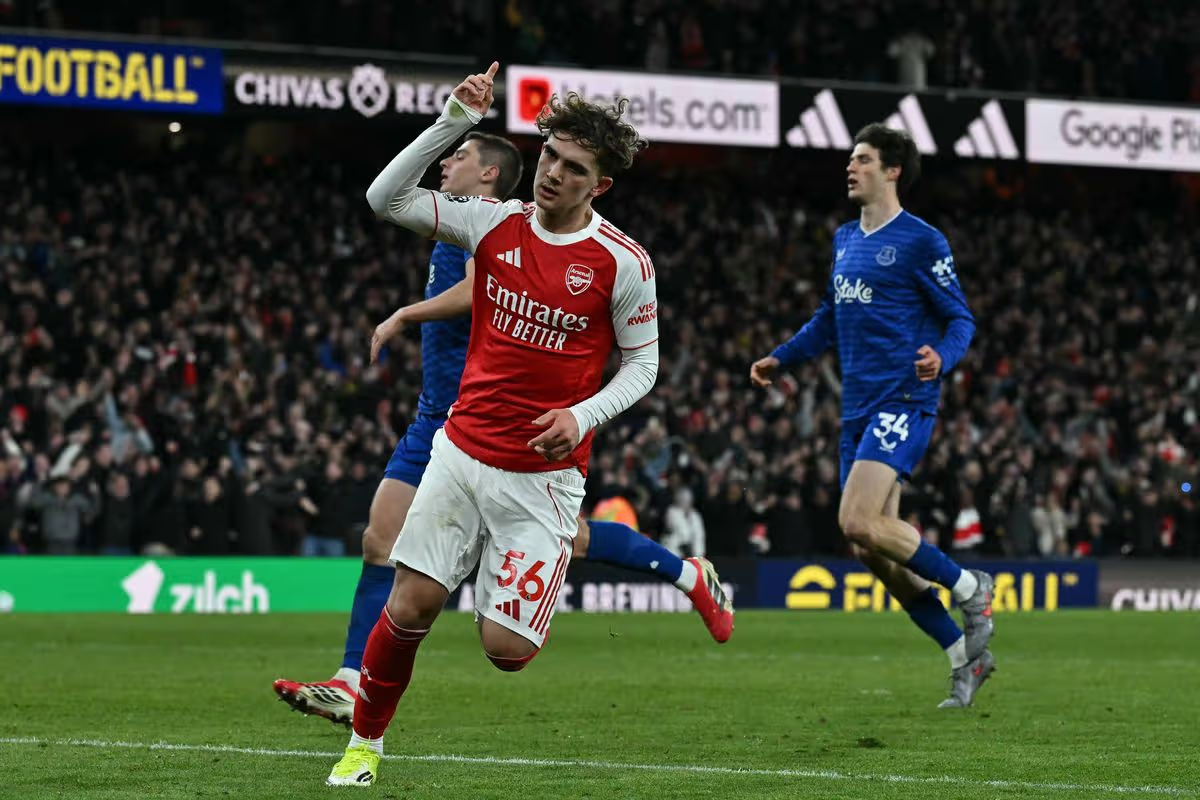
As soon as Max Dowman, Arsenal’s young, blossoming star, stepped on the pitch, you could feel an energy shift in the stadium emanating through to the TV. It seemed that Arsenal were destined for another draw that would’ve zapped the energy out of the stadium.
After a dour eighty-odd minutes without a goal, knowing that a win would secure Arsenal’s nine-point gap on Manchester City, Dowman found teammate Viktor Gyokeres with a cross, who then blasted the ball into the net.
Dowman ran towards Gyokeres and celebrated with him, jumping with excitement. Although the moment belonged to the Swedish striker, it wouldn’t have occurred without the youngster’s electricity and unshackled approach.
That was, until goalkeeper Jordan Pickford went up for Everton’s corner in a last-ditch hope to help his team score. To Arsenal’s delight, they defended well, and Dowman careened around two opposition players and dribbled the length of the pitch to score in an undefended area to tap in the goal that would clinch his team’s victory.
The entire stadium erupted, I shouted every expletive under the sun in the pub, and the entire Arsenal bench emptied and ran towards Dowman to celebrate his moment. The praise from all corners of the football world followed, with many even calling for England manager Thomas Tuchel to select the 16-year-old for the World Cup squad this summer. (Perhaps premature, given the English media’s history with hyping up youngsters only to tear them down before they’ve even kicked a ball.)

However, the praise heaped on Dowman speaks not only of his ingenuity, flair, and creativity but also of the youngster being unburdened by the demands of playing regularly within tactical systems and just having fun with it. No doubt, he’ll have his own pressures balancing his GCSEs this summer while dealing with the throes of professional football but those around him are protecting him, ensuring he retains his childlike playfulness.
Speaking about Dowman, Arteta said, “It’s not only the goal that he scored. I think he changed the game. Every time he got the ball, he made things happen. It looked like we were more of a threat. To do that at that age, in this context, with this pressure, it is just not normal.”
Max Dowman’s story is but one of many examples of young people leaning into instinct, which is why he’s becoming one of football’s most promising stars, particularly in a Premier League season which has been quite turgid in terms of excitement and free-flowing football. That instinctiveness used to be the norm in top-tier football, with the likes of Dennis Bergkamp, Jack Wilshere, Paul Gascoigne, Jay-Jay Okocha, Ronaldinho and David Beckham doing things with footballs that seemed to defy physics.

This evolving landscape in football, marked by tactical shifts and a perceived prioritisation of structure over flair, has had a notable impact on how younger audiences are watching the sport. A growing segment of this demographic is finding the modern game less immediately engaging, leading to a visible trend of seeking out historical content. Instead of following the latest fixtures, many are turning to platforms like YouTube to watch compilations of legendary footballers from previous generations, those known for individual brilliance, unpredictable skill, and a more open style of play. This nostalgic consumption suggests a yearning for a form of the game that they feel is missing in the current, highly systematised environment.
The decreased appeal of the contemporary top-tier game, particularly amongst younger viewers accustomed to high-paced, constant entertainment, is also forcing footballers themselves to adapt how they engage with their fans. Recognising this shift in attention and the desire for more personalised, unscripted content, players are increasingly exploring alternative platforms. One such example is the rise of the Baller League, a format that offers a more dynamic, skill-focused, and accessible form of football entertainment.
This movement highlights a significant divergence: as the professional game becomes more risk-averse and standardised, a parallel, more vibrant ecosystem is emerging to recapture the raw excitement and street-football sensibility that resonates strongly with a modern, digitally native audience. The engagement with platforms like the Baller League is a direct response to a demand for innovation and accessibility, serving as a crucial outlet for both players and fans seeking an appealing alternative to the rigidity of the traditional football establishment.
This trend towards uniformity and minimalism is not exclusive to football; it is mirrored across other industries such as logos, tech, films, TV, and even fashion, where there's a lean towards conformity and a purging of mavericks who challenge expectations. Even the Premier League logo and Player of the Match awards feel minimalist compared to the old logo with a lion’s paw atop a football. This wider cultural shift makes it unsurprising that many find the current aesthetics of football regressive. Everything we are presented with suggests that adhering to a template and playing it safe, while potentially financially rewarding, ultimately risks stifling inspiration. Sure, logos especially undergo revamps and redesigns as time moves forward. Still, over the past decade, minimalism has taken hold, and in turn, removed any of the emotion that you may feel when you see a football club’s badge. And this has trickled down to the style of play on the pitch.

And it’s less about brands in this space in the traditional sense, but about players who have become brands in their own right because of the individuality they bring to the game, who sit head and shoulders above the rest. Think Lamine Yamal, Eberechi Eze, Michael Olise, Max Dowman, Désiré Doué, Khvicha Kvaratskhelia, Morgan Rogers, and of course, Jude Bellingham. They’ve not transcended the teams they play for but instead have come to represent the values and traditions the clubs stand for. It’s why young audiences can watch rival teams they don’t support because they expect and hope for some magic and ingenuity by any of the players named above. That trend hasn’t shifted much since the 2000s, but we’re seeing content creators make compilation videos of these stars, which builds an allure.
As a lifelong Arsenal fan, in his thirties, moments like Dowman are what I still live for. Where a young player can turn a game on its head through their own panache and maverickism, and imbue a sense of playfulness that redefines winning, not necessarily being the result itself, but the joy you feel watching the game.